


We often think of yard work as a spring or summer activity, but there are good reasons to consider certain tasks during the colder months. One such task is stump grinding. While it might seem counterintuitive, winter can actually be the best time to get those unsightly stumps removed. We’ll look at why this is the case and what you need to do to prepare.
Key Takeaways
- Winter’s colder temperatures and drier ground make it easier for professionals to access and work on stumps without causing much damage to your yard.
- The reduced plant growth in winter means less disruption to your property, and the ground is usually firmer, which helps with equipment stability.
- Before the stump grinding services arrive, we should clear the area around the stump and take steps to protect any nearby plants or landscaping from the work.
The Advantages of Winter Stump Grinding Services
When the leaves have fallen and the ground starts to harden, it might seem like the last time you’d want to think about tree stumps. However, we’ve found that winter actually presents some pretty good reasons to schedule stump grinding. It’s not just about getting it done; it’s about making the process smoother and less bothersome for everyone involved.
Easier Access and Less Disruption
One of the biggest pluses of winter stump grinding is how much easier it is to get around. In warmer months, your yard is likely full of plants, garden beds, and maybe even temporary structures like patio furniture or play sets. All of these can get in the way, making it tricky for our equipment to reach the stump and increasing the risk of accidental damage. In winter, with most of the yard cleared off or dormant, our team can usually get right to the stump without a fuss. This means less time spent moving things and a lower chance of anything getting bumped or broken. We can often complete the job more quickly when access is straightforward.
The reduced foot traffic and general activity in yards during winter also means less disruption to your daily life. We’re not dodging kids playing or pets running around as much, and the noise from the grinder is less likely to disturb neighbors enjoying their outdoor spaces.
Optimal Conditions for Stump Grinding Services
The cold weather itself can actually be a benefit. When the ground is frozen or at least firm, it supports the weight of our heavy machinery much better. This prevents the equipment from sinking into the soil, which can leave ruts and damage your lawn, especially if it’s already soft from rain or snowmelt. A solid, frozen surface allows us to maneuver more safely and effectively. Plus, the cold temperatures can sometimes make the wood itself a bit more brittle, which can aid the grinding process. It’s not a dramatic difference, but any little bit helps in making the job more efficient. We find that the overall conditions are just more predictable and manageable when the weather is consistently cool.
Preparing Your Property for Winter Stump Grinding
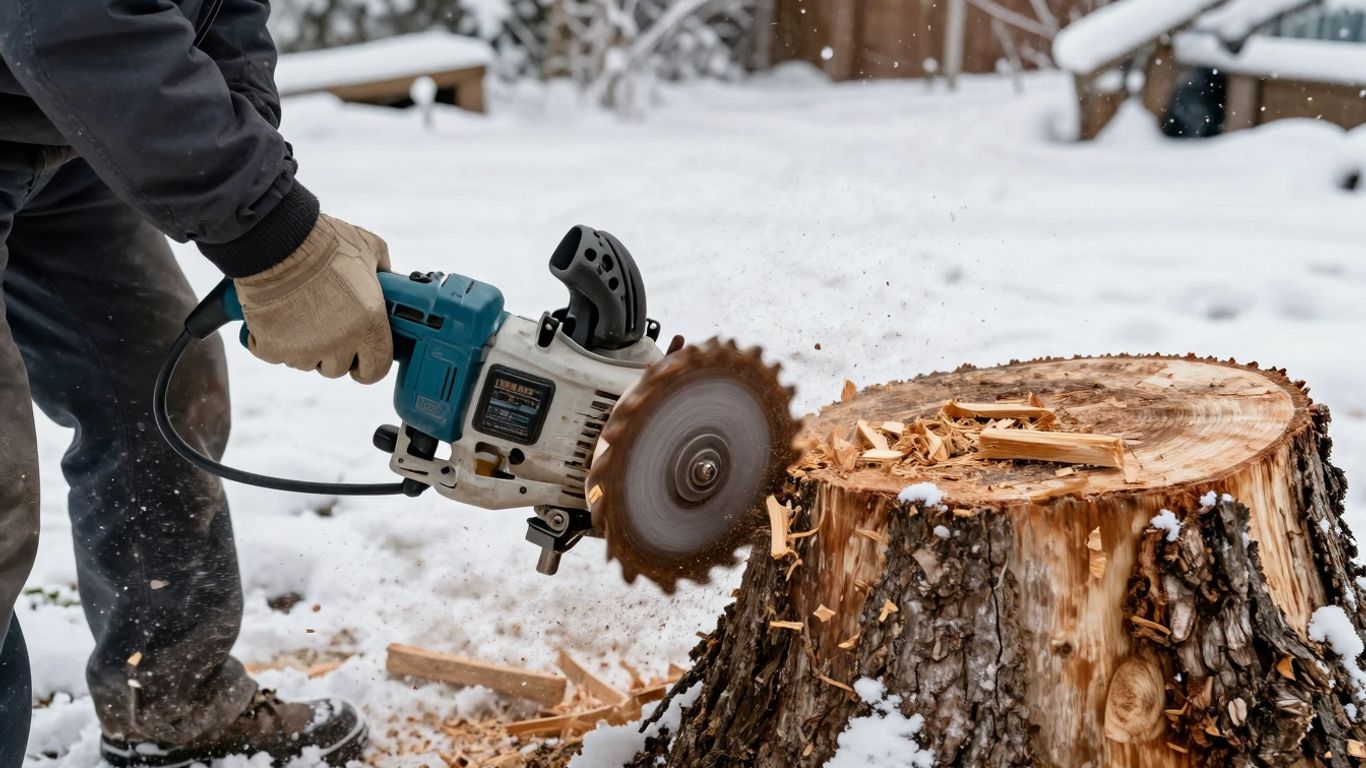
Even though winter offers some great benefits for stump grinding, we still need to get our yards ready. It’s not a lot of work, but doing a little bit beforehand makes the whole process go much smoother for everyone involved. We want to make sure the grinding crew can get to the stump easily and that your yard doesn’t end up looking like a mud pit.
Clearing the Area Around the Stump
Before the grinding service arrives, we should take a look around the stump. Think about what might be in the way. Are there any decorative rocks, garden gnomes, or maybe some potted plants that are too close? We’ll need to move these things. It’s also a good idea to check for any buried items. Sometimes people forget about old bricks, pavers, or even forgotten toys that are just under the surface. Removing these obstacles beforehand saves time and prevents potential damage. We don’t want the grinding equipment to hit anything unexpected.
- Remove any garden decorations.
- Clear away potted plants or planters.
- Check for and remove any buried debris like rocks or old landscaping materials.
- Mow the grass around the stump if conditions allow, but don’t worry too much if it’s too cold or wet.
Protecting Your Landscape
Winter weather can be tough on plants, and we don’t want to add to that stress. The stump grinding process creates a lot of wood chips, and these can sometimes get spread around. We should think about any plants or garden beds that are close to the stump. If there are sensitive plants we want to keep safe, we can cover them with tarps or plywood. This is especially important for smaller shrubs or delicate flowers that might be easily damaged by flying debris or the heavy equipment. We also need to consider where the wood chips will go. The grinding company usually handles this, but it’s good to have a general idea. They’ll typically pile them up nearby, and we can decide later if we want to use them for mulch or have them hauled away. Just a little bit of planning goes a long way in keeping our property looking good, even after a big job like stump grinding.
We should also think about the ground itself. If the ground is already soft from recent rain or snowmelt, the heavy equipment could leave ruts. While winter grinding often means firmer ground, it’s still something to keep in mind. If we can, avoiding areas that are already waterlogged will help keep our lawn in better shape.
- Cover nearby sensitive plants with tarps or plywood.
- Discuss with the grinding service where wood chips will be deposited.
- Consider the path the equipment will take and if it might damage the lawn.
- If possible, mark any sprinkler heads or irrigation lines near the stump area.
Wrapping It Up
So, as we’ve seen, winter really does present some good reasons to get that stump grinding done. The ground is usually firmer, making it easier for the equipment to move around without getting stuck. Plus, with fewer leaves and less growth, the stump is more exposed, which can speed up the whole process. It just seems like a more practical time to tackle the job, getting it out of the way before spring planting or summer activities kick into high gear. We think it’s a smart move to consider this colder season for your stump removal needs.
Frequently Asked Questions
Why is winter a good time to get rid of tree stumps?
We find that winter offers some distinct benefits for stump grinding. The ground is often firmer, which makes it easier for our equipment to move around without causing much damage to your yard. Also, many plants and trees have lost their leaves, meaning there’s less to get in the way, and we can reach the stump more easily. This often leads to a smoother and quicker job for us and less mess for you.
What do we need to do before the stump grinding service?
Before we arrive, we suggest you clear the area directly around the stump. This means moving any rocks, garden decorations, or other items that might be nearby. It’s also a good idea to make sure we can easily get our equipment to the stump. While we take care to protect your lawn, if you have any delicate plants or flower beds close to the stump, letting us know or covering them can help prevent any accidental damage.
Will stump grinding hurt our garden?
Our main goal is to remove the stump with as little impact on your yard as possible. The machines we use are designed to grind the stump down, not dig up your whole garden. Because the ground is usually harder in winter, it helps prevent deep ruts. We’re careful to cover nearby plants and keep the grinding contained, so your garden should be safe. After we’re done, you can easily fill the hole with soil and replant grass or flowers.
