


Winter storms can be rough on our trees. When heavy snow and ice hit, branches can break, and sometimes whole trees can become unstable. We need to pay attention to this damage, especially after a big storm, to keep ourselves and our property safe. Ignoring it can lead to bigger problems down the line.
Key Takeaways
- After a bad winter storm, we must check trees for damage that could make them unsafe. Look for broken limbs, cracks, or leaning that wasn’t there before.
- If a tree looks like it could fall or drop heavy branches, we might need emergency tree removal. This is for situations where there’s immediate danger to people or property.
- Getting professional help quickly after a storm helps stop more damage. Tree experts can tell us what needs to be done to make things safe and prevent future issues.
Assessing Storm-Damaged Trees For Safety
After a big winter storm, we often find ourselves looking at our trees with a bit of worry. It’s not just about how they look; it’s about whether they’ve become a safety hazard. We need to take a close look at any trees that took a beating from the wind, snow, or ice.
Identifying Hazardous Tree Structures
When we’re checking out trees after a storm, we’re looking for specific signs that tell us a tree might be dangerous. It’s like being a detective for your yard. We want to spot anything that looks "off." Some common things we look for include:
- Cracks or splits in the trunk or main branches. These are weak points.
- Uprooted or leaning trees. If a tree is leaning more than it used to, especially if you can see roots pulling away from the ground, it’s a big red flag.
- Broken branches, especially large ones, that are hanging precariously. They could fall at any time.
- Signs of decay, like soft wood, fungus, or holes in the trunk. Storms can make these problems worse.
- Branches rubbing together or crossing each other. This can cause damage over time and weaken the tree.
We need to be extra careful when inspecting trees that are close to our homes, garages, or power lines. A falling tree or even a large branch can cause a lot of damage and injury.
When To Call For Emergency Tree Removal
Sometimes, the damage is just too much to ignore, and we need to act fast. If you see any of these situations, it’s time to call in the pros for emergency tree removal:
- A tree is leaning heavily towards a structure or a public area.
- Large branches are hanging by a thread, ready to fall.
- The trunk of the tree has a deep crack that goes more than halfway through.
- The tree has been completely uprooted and is lying on the ground.
It’s always better to be safe than sorry. If you have any doubt about a tree’s stability after a storm, don’t try to fix it yourself. Call a qualified arborist. They have the right tools and know-how to handle dangerous situations safely.
We can’t stress enough how important it is to get professional help for these kinds of problems. Trying to deal with a severely damaged tree on your own can lead to serious accidents. Let the experts handle the risky work.
Preventing Further Damage And Hazards
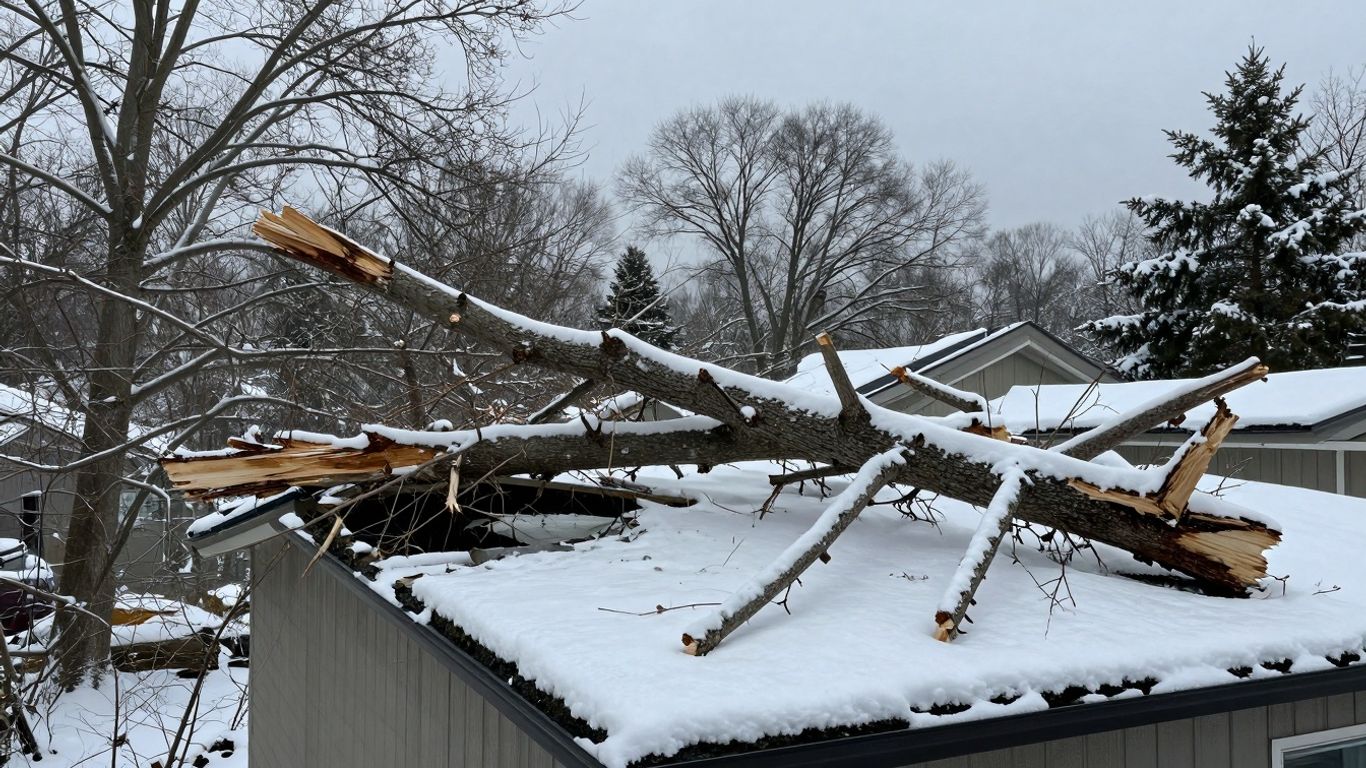
After a big winter storm, we often find ourselves dealing with more than just a messy yard. Damaged trees can become real problems if we don’t address them quickly. We need to think about how these weakened trees might affect our homes, our cars, and even our neighbors. It’s not just about the tree itself; it’s about the safety of everything around it.
Mitigating Risks To Property And People
When we see branches hanging precariously or entire trees leaning at odd angles, we have to act. A strong gust of wind, even one that seems mild after the main storm has passed, could be enough to bring down a weakened limb or, worse, the whole tree. We’ve seen it happen – a large branch crashing through a roof or a falling trunk smashing a car. It’s a good idea to walk around your property and really look at the trees, especially those close to buildings, driveways, or play areas. We should also check power lines; if a tree or branch is touching or very close to them, that’s a serious electrical hazard we need to report immediately.
- Inspect the base of the tree: Look for signs of root damage or soil heaving, which can indicate instability.
- Examine the trunk: Check for deep cracks, splits, or large cavities that compromise the tree’s structure.
- Assess the canopy: Identify broken or hanging branches, especially those that are large or positioned over vulnerable areas.
- Consider the lean: A tree that has started leaning significantly after the storm might be uprooted or have compromised roots.
The Importance Of Prompt Professional Intervention
We might be tempted to try and clean up smaller branches ourselves, and that’s fine for minor debris. But when it comes to significant damage, like large broken limbs or unstable trees, calling in the pros is the smart move. Tree removal services have the right equipment and the know-how to handle these situations safely. They can assess the risk accurately and remove the danger without causing more damage to your property or, more importantly, without getting hurt themselves. Trying to tackle a large, damaged tree without experience is incredibly risky. We’ve heard stories of people getting seriously injured attempting DIY tree removal, and it’s just not worth the gamble. A professional arborist can also advise on whether a damaged tree can be saved or if removal is the only safe option. They understand tree health and structural integrity, which helps us make the best decision for our property’s long-term safety and appearance.
Dealing with storm-damaged trees requires a careful approach. While we can handle small cleanup tasks, larger issues demand professional attention to prevent accidents and further property damage. It’s about making informed decisions for safety.
Here’s a quick look at why professional help is often best:
- Safety: Professionals have the training and safety gear to work at heights and with heavy equipment.
- Equipment: They possess specialized tools like cranes, bucket trucks, and powerful chainsaws that most homeowners don’t have.
- Expertise: Arborists can properly assess tree health and structural integrity, determining the best course of action.
- Efficiency: They can often complete the job much faster and more effectively than an amateur.
- Insurance: Reputable companies are insured, protecting you from liability if an accident occurs on your property.
Wrapping Up: Safety First
So, after a big winter storm, we’ve seen how important it is to look at our trees. It’s not just about how they look, but about keeping ourselves and our property safe. We need to be smart about checking for damage, especially if branches look weak or are leaning in odd ways. Getting a professional to take a look can save us a lot of trouble down the road. Let’s make sure we’re doing our part to stay safe this season.
Frequently Asked Questions
How can we tell if a tree is unsafe after a big winter storm?
We should look for signs like branches that are broken or hanging loosely, cracks in the trunk, or if the tree seems to be leaning more than usual. Sometimes, roots might be pushed up out of the ground, which is a big warning sign.
When is it absolutely necessary to get a tree removed right away?
If a tree or a large branch is leaning towards our house, a power line, or a busy area, we need to act fast. Also, if we see deep cracks or signs that the tree might fall soon, it’s time to call the experts for emergency removal to keep everyone safe.
What happens if we don’t deal with storm-damaged trees quickly?
Leaving damaged trees can be risky. They might fall later, causing damage to our property, vehicles, or even hurting someone. Also, broken branches can snag on other trees or power lines, creating more problems. Taking care of them promptly prevents bigger headaches down the road.
