


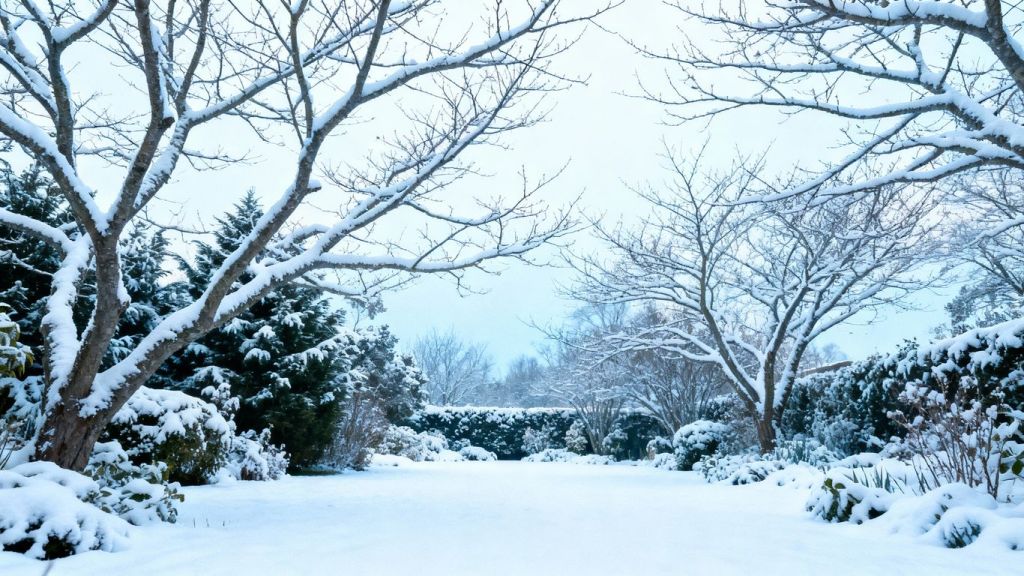
As winter storms approach, we need to think about our yards. Protecting our trees and shrubs is important. We also need to deal with loose stuff that could cause problems. Taking some steps now can help prevent damage later. We’ll look at what we can do to get ready.
Key Takeaways
- We should prune trees and shrubs to make them stronger against wind and snow. This means cutting off dead or weak branches.
- We need to clear our yards of anything that could blow around or fall, like old branches or garden furniture. This also includes thinking about getting professional tree removal services for any trees that look like they might be a danger.
- For young or weak plants, we might need to tie them up or cover them to keep them safe from harsh weather.
Protecting Your Trees and Shrubs
As winter storms approach, we need to think about our trees and shrubs. These plants are part of our landscape, and we want them to make it through the cold and wind without too much damage. Taking some steps now can make a big difference when the snow starts falling and the winds pick up.
Pruning for Storm Resilience
Pruning is one of the most important things we can do. It’s not just about making things look neat; it’s about making them stronger. We should look for branches that are dead, damaged, or rubbing against each other. These are weak points that can break easily in high winds or under the weight of snow and ice. Removing them now prevents bigger problems later.
- Remove dead or diseased branches: These are already weak and can spread problems to healthy parts of the tree.
- Thin out crowded areas: Too many branches close together can create a dense canopy that catches more wind. Lightening it up helps air flow through and reduces wind resistance.
- Address crossing or rubbing branches: These can cause wounds that let in pests and diseases, and they can weaken the tree over time.
- Trim water sprouts and suckers: These fast-growing shoots often don’t contribute much to the plant’s structure and can divert energy.
We should also consider the overall shape of our trees. For trees that tend to grow tall and narrow, we might want to prune them to be a bit more balanced. This helps distribute weight more evenly. It’s best to do most of this pruning in late winter or early spring, before new growth starts, but removing hazardous branches can be done anytime.
Taking the time to prune properly before winter hits is an investment in the long-term health and safety of our landscape. It’s better to do a little work now than to deal with broken limbs and damaged plants after a storm.
Securing Young or Vulnerable Plants
Some plants, especially those that are newly planted or have weaker structures, need extra help to survive winter storms. We can protect them by giving them some support or covering them up.
- Staking young trees: If we have trees that were planted this year, their root systems might not be strong enough to hold them steady. We can use stakes to keep them upright. Make sure the stakes aren’t too tight, and remove them after a year or so once the tree is established.
- Wrapping trunks: For young trees with thin bark, wrapping the trunk with tree wrap can protect them from sunscald (damage from winter sun) and from animals that might chew on the bark.
- Using burlap screens: For shrubs that are particularly sensitive to wind or snow, we can wrap them loosely in burlap. This acts as a windbreak and can prevent branches from snapping under heavy snow.
- Mulching: A good layer of mulch around the base of trees and shrubs helps insulate the soil, protecting the roots from freezing and thawing cycles. Keep the mulch a few inches away from the trunk itself to prevent rot.
We need to be careful not to tie things too tightly or wrap too densely, as this can sometimes do more harm than good. The goal is to provide support and protection without restricting growth or causing other issues. Checking on these plants periodically through the winter is also a good idea, especially after a big storm.
Managing Yard Debris and Potential Hazards
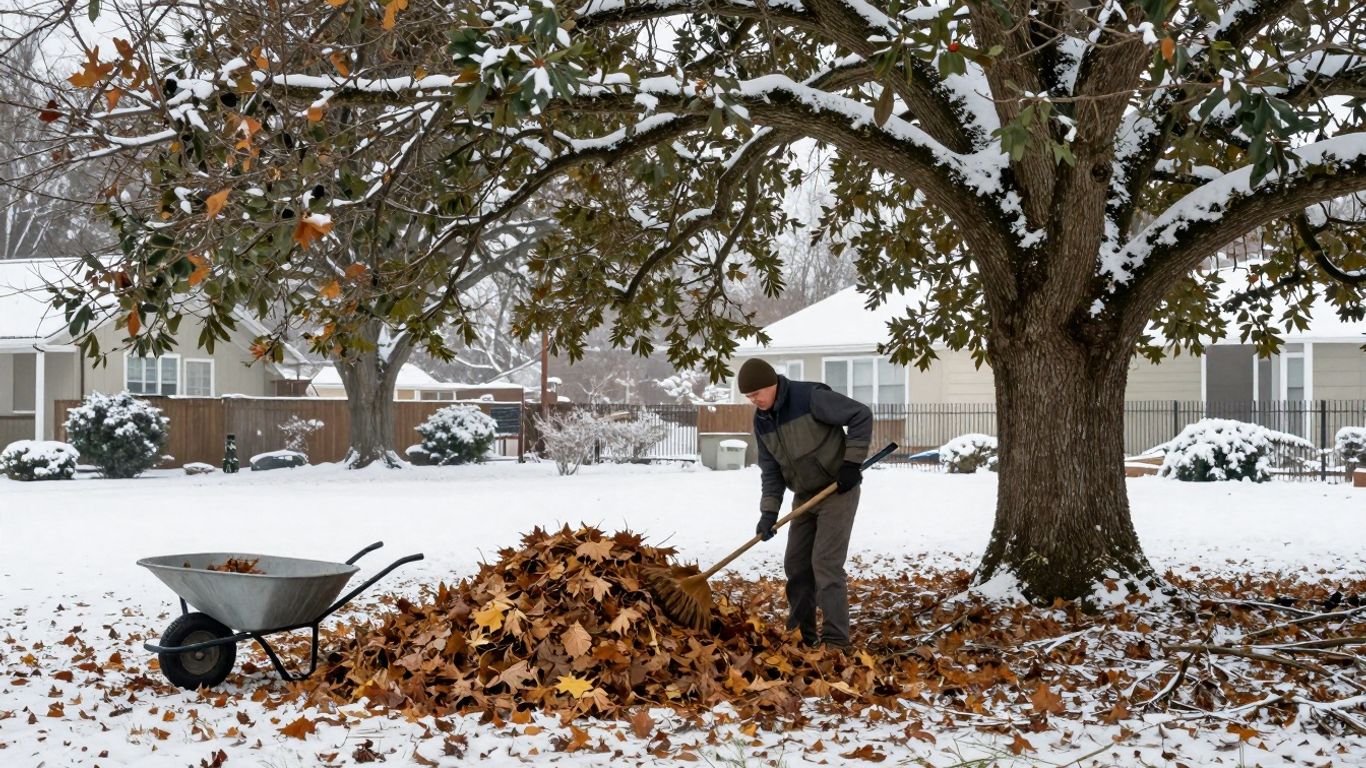
As winter storms approach, we need to think about what’s lying around our yards. Loose branches, fallen leaves, and other bits of yard waste can become real problems when the wind picks up or snow starts to pile. Taking a little time now to clear things out can save us a lot of trouble later.
Clearing Loose Branches and Debris
We should walk around our property and look for anything that seems ready to fall or is already on the ground. This includes:
- Branches that are cracked or hanging precariously.
- Any dead trees or large limbs that look unstable.
- Loose garden furniture, decorations, or tools that could blow away.
- Piles of leaves or mulch that might get heavy with snow and ice.
It’s a good idea to have some basic tools handy, like a rake, a sturdy broom, and maybe some pruning shears for smaller branches. For anything bigger, we might need to be more careful.
Considering Professional Tree Removal Services for Damaged Trees
Sometimes, we find trees or large branches that are clearly damaged or diseased. Trying to handle these ourselves can be dangerous, especially if they’re large or close to our homes or power lines. We should look at the tree’s condition:
- Is there significant cracking or splitting in the trunk or major limbs?
- Are there signs of rot or insect infestation that weaken the structure?
- Does the tree lean at an unusual angle, especially after recent weather?
If we see any of these issues, it’s probably best to call in the professionals. They have the right equipment and know-how to take down a tree safely. We can get a few quotes to compare prices and services. It might seem like an expense, but it’s often cheaper than dealing with the damage a falling tree can cause.
We want our yards to be safe places, not just for us but for our neighbors too. A storm can turn a simple yard item into a projectile. Being proactive now means less worry when the weather turns bad.
Wrapping Up for Winter
So, we’ve gone over a few things we can do to get our yards ready for whatever winter throws at us. It might seem like a lot, but taking these steps now can really save us some trouble later. We don’t want to be out there in the middle of a blizzard trying to tie down a tree branch or clear out gutters. A little bit of work now means less stress when the snow starts falling and the winds pick up. Let’s get it done so we can relax when the cold weather hits.
Frequently Asked Questions
When is the best time to trim our trees and bushes before a storm?
We should aim to do our pruning before the harsh winter weather sets in. Late fall, after the leaves have dropped but before the ground freezes solid, is usually a good window. This allows us to see the branches clearly and helps the plants recover before the cold really hits hard.
What should we do with all the fallen leaves and small branches in our yard?
It’s best to clear away any loose leaves, twigs, and fallen branches. These items can become projectiles during strong winds or heavy snow, causing damage. Gathering them up also helps prevent them from clogging up our gutters or drains, which can lead to bigger problems like flooding when the snow melts.
How can we tell if a tree on our property is too dangerous to keep?
We should look for signs like large cracks in the trunk, branches that are dead or hanging at odd angles, or if the tree seems to be leaning more than usual. If we’re unsure, or if a tree looks like it might fall on our house or a neighbor’s property, it’s wise to get a professional opinion. They can assess the tree’s health and advise us if it needs to be taken down safely.
