


After a strong storm, we often find ourselves looking at trees that have seen better days. Some might just have a few broken branches, while others look like they’ve been through a war. Dealing with trees that have been damaged by weather can be tricky, and knowing what to do next is important for keeping our property and ourselves safe. We’ll walk through how to figure out which trees are a problem and what steps we should take, especially when it comes to storm damaged tree removal.
Key Takeaways
- We need to carefully check trees after a storm for signs of damage that could make them dangerous. Look for things like split trunks, weak branches, or roots that are coming out of the ground.
- Deciding if a tree needs to be removed is a big step. Sometimes, it’s best to call in people who know how to handle storm damaged tree removal safely, especially if the tree is large or near buildings.
- When we do need to remove a damaged tree, we must follow safety rules. This means having the right tools and knowing how to use them, or letting the pros take care of it if we’re not sure.
Assessing Storm Damaged Tree Risks
After a storm passes, our first thought might be about the mess left behind, but we also need to think about the trees. Some might look okay from a distance, but closer inspection is needed. We have to be careful because a damaged tree can be a real hazard.
Identifying Hazardous Tree Structures
When we look at trees after a storm, we’re really looking for signs that they might break or fall. It’s not always obvious. We need to check for a few key things.
- Cracks in the trunk or major branches: These are big red flags. A crack means the wood is already weakened.
- Uprooted or leaning trees: If a tree is leaning more than it used to, or if you can see roots pulling away from the ground, it might not stay standing.
- Broken branches hanging precariously: These are often called ‘widowmakers’ for a reason. They can fall without much warning.
- Cavities or decay: Large holes or soft, crumbly wood are signs the tree isn’t healthy and strong.
We also need to consider the location of the damage. A tree with a crack that’s far from any buildings or walkways is less of an immediate threat than one leaning towards a house or a busy path.
We should always err on the side of caution when assessing tree damage. If we’re unsure about a tree’s stability, it’s better to treat it as a potential risk until a professional can look at it.
Understanding Tree Weaknesses After A Storm
Storms do more than just break branches. They can stress trees in ways that aren’t immediately visible. Wind can twist trunks, and heavy rain can saturate the soil, making it harder for roots to hold the tree steady. Ice and snow add weight, which can cause branches to snap even days after the storm has passed.
We’ve found that trees with certain characteristics are more prone to damage:
- Shallow-rooted species: Trees that don’t have deep root systems are more likely to be blown over.
- Trees with poor form: Those with narrow angles between branches or co-dominant stems are often weaker.
- Older or diseased trees: Like us, older trees can be more vulnerable. Existing health problems make them less resilient.
It’s also worth noting that the type of storm matters. High winds can cause different kinds of damage than heavy, wet snow. We need to think about both the visible damage and the underlying stress the tree might be under.
Prioritizing Storm Damaged Tree Removal
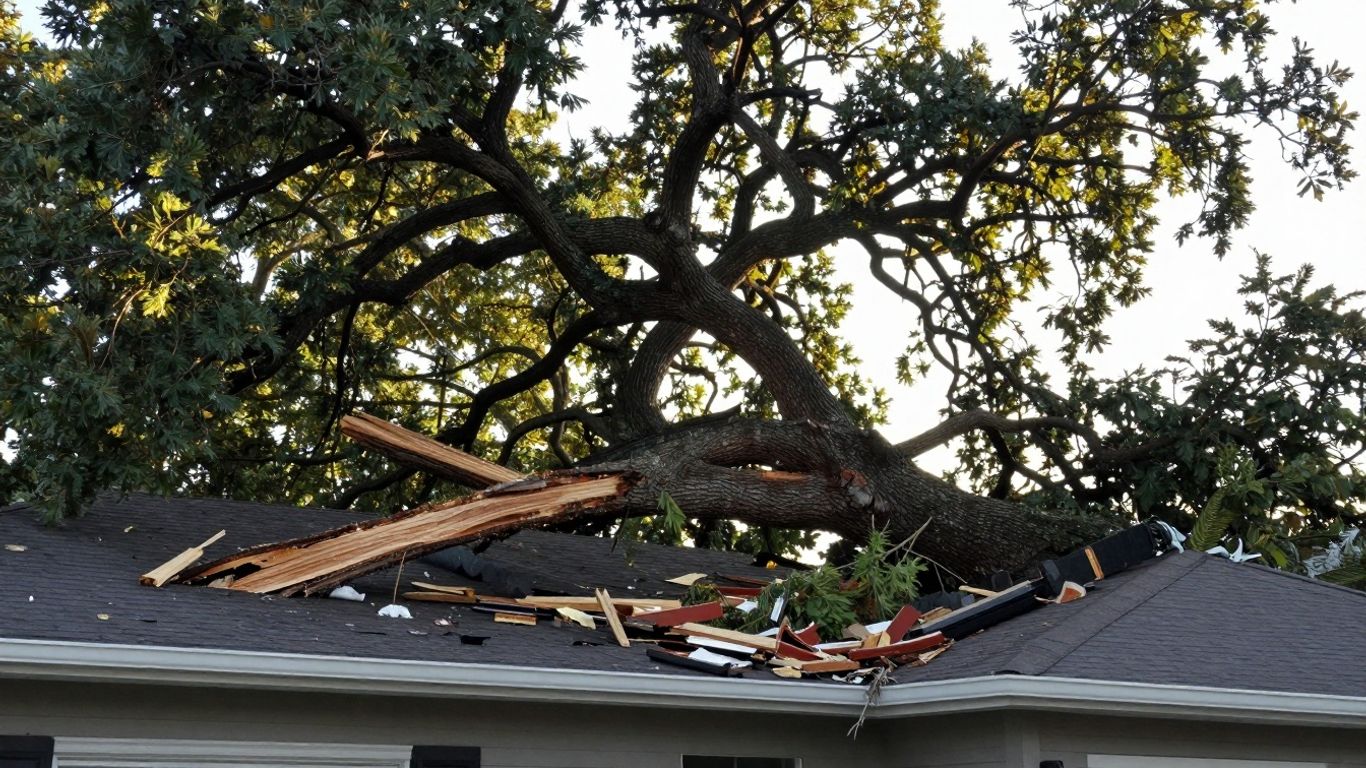
After a storm, we often find ourselves looking at trees that have taken a beating. Some damage is minor, but other situations demand immediate attention. Deciding what to do with these trees can feel overwhelming, especially when safety is on the line. We need to figure out which trees are a real problem and which ones might recover with some care.
When To Call Professionals For Tree Removal
There are times when trying to handle a damaged tree ourselves is just not a good idea. We should call in the pros when the situation looks particularly dangerous or complicated. Think about these scenarios:
- Trees leaning precariously: If a tree is leaning heavily towards a house, a power line, or even a busy walkway, it’s a major hazard. We don’t want to wait to see if it falls on its own.
- Large, broken limbs hanging: Big branches that are cracked or hanging by a thread are incredibly dangerous. They can fall without warning, causing serious damage or injury.
- Extensive root damage: If the storm has clearly uprooted the tree or significantly damaged its root system, the tree’s stability is compromised. It might look okay from the top, but it could be ready to topple.
- Trees near power lines: This is a big one. Working near electricity is extremely risky, and only trained professionals with the right equipment should ever attempt to remove trees or branches in such situations.
We must remember that our own safety comes first. If a tree looks like it could fall or has large, unstable parts, it’s best to step back and let the experts handle it. They have the tools and know-how to manage these risks.
Safe Practices For Removing Damaged Trees
When we do decide to remove a damaged tree, or when professionals are on the job, certain safety steps are non-negotiable. It’s not just about getting the tree down; it’s about doing it without causing more problems.
- Clear the area: Make sure no people or pets are nearby. We need a wide safety zone around the tree being worked on.
- Assess the fall path: Plan where the tree will fall. This involves looking at the lean of the tree, surrounding obstacles, and wind conditions. Professionals use ropes and other techniques to control the direction.
- Use proper equipment: This includes safety gear like helmets, eye protection, gloves, and sturdy footwear. For the actual cutting, chainsaws should be well-maintained, and for larger jobs, specialized equipment like bucket trucks or cranes might be necessary.
- Work with a partner: It’s always safer to have at least one other person present, even if they aren’t actively cutting. They can help watch for hazards, manage the ropes, or call for help if needed.
The goal is always to remove the threat safely and efficiently. This means being prepared, knowing our limits, and not hesitating to call for help when the job is beyond our capabilities.
Moving Forward After the Storm
Dealing with trees damaged by storms can feel overwhelming, can’t it? We’ve looked at a few ways to handle the situation, from quick fixes to more involved cleanup. Remember, safety first. If a tree looks really bad or is leaning dangerously, it’s best to call in someone who knows what they’re doing. For smaller issues, we can often manage them ourselves with the right tools and a bit of know-how. Taking care of these trees now means fewer problems down the road and a safer yard for everyone. Let’s keep our trees healthy and our homes secure.
Frequently Asked Questions
How can we tell if a tree is dangerous after a storm?
We should look for obvious signs like big cracks in the trunk, branches that are hanging low and look like they could fall, or if the tree itself seems to be leaning a lot more than usual. Sometimes, the roots might even look like they’re lifting out of the ground. These are all red flags that the tree might not be safe.
When is it best to get a pro to take down a damaged tree?
It’s usually time to call in the experts when the damage is severe, the tree is very large, or it’s close to our homes, power lines, or other important structures. If we’re not sure about how to handle it safely, or if the tree is in a tricky spot, it’s always better to let trained professionals handle the tree removal. Their experience means they can do it without causing more harm.
What are some simple safety tips when dealing with fallen branches?
When we find fallen branches, we should never try to move really big ones by ourselves, especially if they’re still resting on something unstable. We should also be careful of smaller pieces that might snap back. If there are any broken branches still stuck high up in the tree, it’s best to stay clear and let someone with the right gear and knowledge deal with them. Safety first is our main goal.
