


When severe weather hits, trees on our property can become a real concern. We want to keep our homes and families safe, and that means thinking ahead about how our trees might react to strong winds and heavy rain. Taking some steps now can make a big difference later, especially when it comes to avoiding damage and knowing what to do if the worst happens. We’ll look at how to care for trees before a storm and what to do if a tree does get damaged.
Key Takeaways
- Regularly checking on our trees and trimming them helps prevent problems before storms arrive. It’s good to know if a tree has weak spots.
- After a storm, we need to look at any trees that were affected. Sometimes, damage isn’t obvious right away.
- Knowing when to call professionals for emergency tree removal is important for safety. We shouldn’t try to handle dangerous situations ourselves.
Proactive Tree Care To Mitigate Storm Damage
When we think about storms, we often focus on the immediate aftermath – the downed branches, the scattered leaves. But a lot of what happens during a storm is actually determined long before the wind starts to howl. Taking good care of our trees beforehand can make a big difference in how well they hold up when bad weather hits. It’s about being smart and getting ahead of potential problems.
Regular Pruning And Health Assessments
One of the most straightforward things we can do is keep up with pruning. Think of it like giving our trees a regular haircut. We need to remove dead or dying branches. These are weak points, and they’re the first things to break off in strong winds or heavy snow. It’s not just about looks; it’s about structural integrity. We should also look for branches that are rubbing against each other. That friction can create wounds, making the tree more susceptible to disease and pests. A good pruning job also helps shape the tree, allowing wind to pass through it more easily, reducing the strain on the trunk and roots.
Beyond just cutting branches, we need to pay attention to the overall health of our trees. Are there any signs of disease, like unusual spots on the leaves or bark? Are there any insect infestations? A healthy tree is a strong tree. We should schedule professional assessments periodically. Arborists have a trained eye for spotting issues we might miss. They can tell us if a tree is getting too old, if it’s leaning too much, or if it’s just not thriving.
Identifying And Addressing Weaknesses
Sometimes, trees have inherent weaknesses that aren’t immediately obvious. We need to be observant. Look for cracks in the trunk or major limbs. Check for cavities or signs of rot, especially near the base of the tree. These are serious issues that can lead to catastrophic failure during a storm. If we see anything concerning, we shouldn’t just ignore it. We need to get it checked out.
Here are some common weaknesses we should look for:
- Included bark: This happens when two branches grow at a tight angle, and the bark gets trapped between them. It creates a weak spot that can split.
- Poorly attached limbs: Limbs that grow straight up from the trunk, rather than at a wider angle, are often not as strong.
- Root problems: Sometimes the issue isn’t with the branches but with the roots. If the ground around the base of the tree is constantly waterlogged or if there’s been recent construction that disturbed the soil, the root system might be compromised.
If we find a tree with significant weaknesses, we have a few options. Sometimes, cabling or bracing can help support weak limbs or trunks. This is like adding extra support beams to a building. In other cases, if the weakness is too severe, the safest course of action might be to remove the tree before it becomes a danger to our property or ourselves. Making these tough decisions proactively saves a lot of trouble later.
It’s easy to think of trees as permanent fixtures, but they are living things that require ongoing care. Just like we maintain our homes, we need to maintain our trees, especially if we live in an area prone to severe weather. A little attention now can prevent a lot of damage down the road.
Responding To Storm-Damaged Trees And Emergency Tree Removal
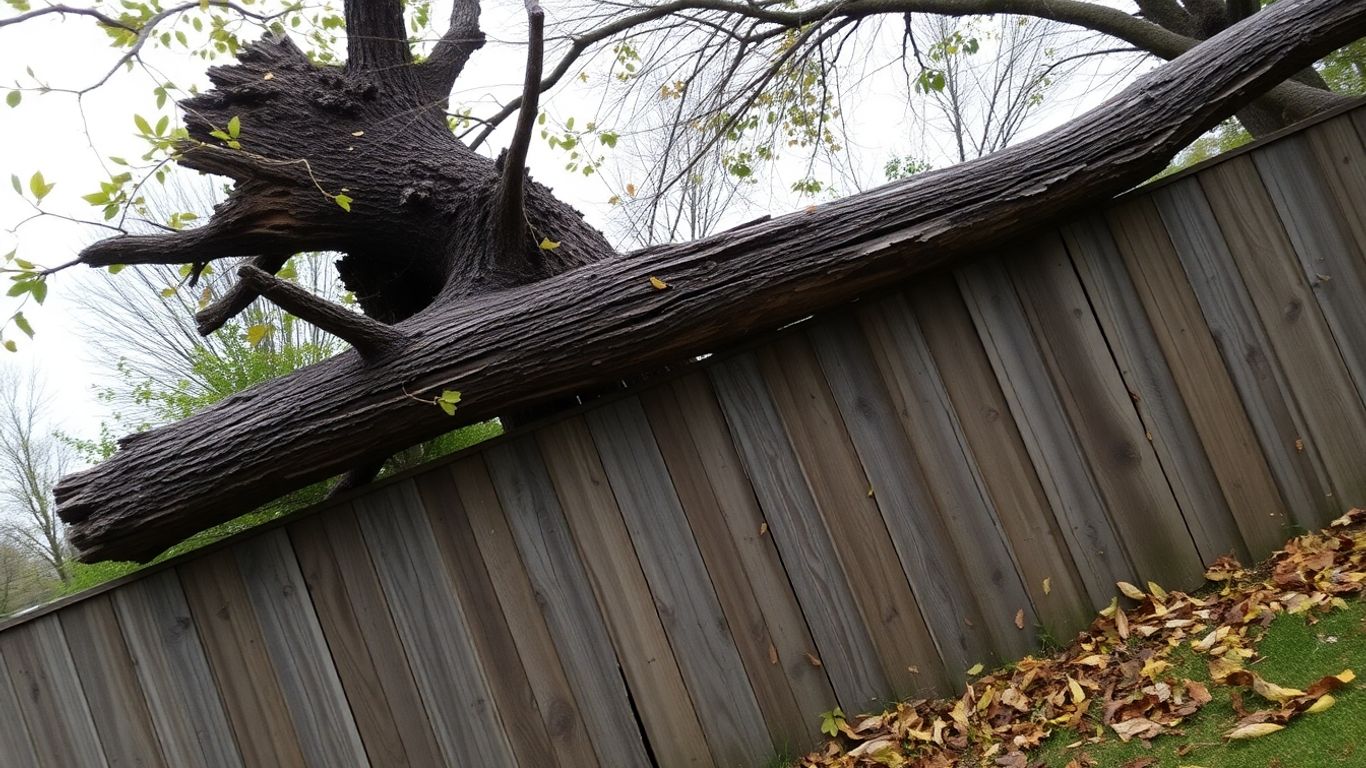
After a storm passes, it’s natural to want to assess the damage. We often find ourselves looking at our trees, wondering what needs to be done. It’s important to approach this carefully, as safety is the top priority.
Assessing Tree Damage After A Storm
Once the wind dies down and the rain stops, we can begin to look at our trees. Sometimes the damage is obvious, like a large branch that has fallen. Other times, it’s more subtle. We should look for:
- Cracks or splits in the trunk or major limbs.
- Uprooted or leaning trees, especially if the lean is new.
- Broken branches that are hanging precariously or have fallen.
- Exposed roots on the ground.
- Damage to the bark, such as deep gouges or peeling.
It’s also a good idea to check the ground around the tree for any fallen limbs or debris. If you see any of these signs, it’s time to be extra cautious. We must not approach damaged trees too closely, especially if they are leaning or have large broken branches.
When To Call For Emergency Tree Removal Services
There are times when the damage is beyond what we can handle ourselves, and that’s when we need to think about calling in the professionals. We should consider emergency services if:
- A tree or large limb is leaning precariously over a house, garage, or other structure.
- A tree has fallen on power lines. Never attempt to touch or move anything near downed power lines. Call your utility company immediately.
- A tree is severely damaged and poses an immediate risk of falling.
- There are large, heavy branches that have broken but are still caught in the tree, creating a falling hazard.
Sometimes, a tree might look bad but can be saved with proper pruning. However, if there’s any doubt about safety, it’s always better to err on the side of caution. We can get a professional arborist to assess the situation. They have the tools and the know-how to safely deal with these kinds of problems. It might seem like a big expense, but it’s often a necessary one to protect our property and our families.
Dealing with storm damage can be stressful. Remember to prioritize safety above all else. If a situation looks dangerous, it probably is. Don’t hesitate to call for help when you need it.
Wrapping Up Our Tree Care
So, we’ve talked about a few things to keep our trees in good shape before a storm hits. It might seem like a lot, but taking these steps can really make a difference when the wind starts blowing. We’re not trying to be tree experts overnight, but a little bit of care now can save us a lot of trouble later. Let’s all try to get out there and give our trees a look. A quick check and a bit of trimming can go a long way. We hope these tips help you feel more ready for whatever the weather throws our way. Stay safe out there!
Frequently Asked Questions
How often should we check on our trees to keep them healthy before a storm?
We recommend having our trees looked at by a professional at least once a year. This helps catch any problems early. Think of it like a yearly check-up for your trees to make sure they’re strong and ready for whatever weather comes our way.
What are some signs that a tree might be weak and could fall in a storm?
We should keep an eye out for cracked branches, deep holes in the trunk, or roots that are lifting out of the ground. If a tree has a lot of dead branches or looks like it’s leaning a lot, these could be signs of trouble. It’s best to get these checked out right away.
When is it absolutely necessary to call for help after a storm damages our trees?
If a tree has fallen and is blocking a driveway or is dangerously close to your house or power lines, we need to call for professional help immediately. Also, if large branches are hanging precariously, it’s safer to have experts remove them before they cause more harm.
