


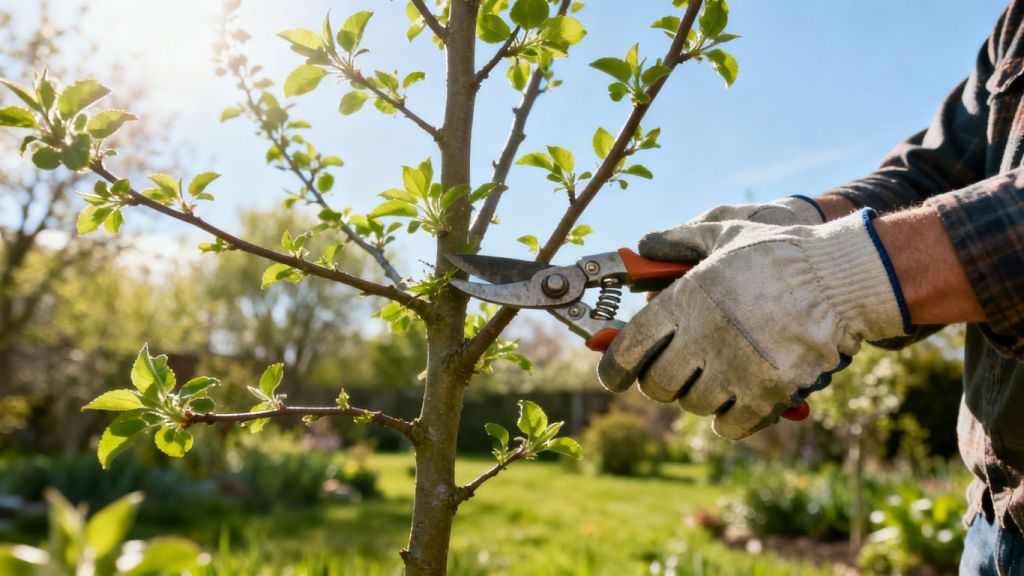
As the weather warms up in spring, it’s a good time to think about our young trees. Getting them shaped correctly when they’re still small helps them grow strong for years to come. We want to build a good base now so they don’t run into problems later. This article will walk you through how we can do that.
Key Takeaways
- Pruning young trees in mild spring weather helps build a strong structure for their future growth.
- Making clean cuts is important for the tree’s health and recovery after pruning.
- Knowing when to call in professional tree pruning services can save a young tree from damage and ensure it grows well.
Establishing A Strong Foundation With Early Tree Pruning
Starting to prune young trees in the mild weather of spring can make all the difference for how those trees grow over the next few years. When we get in there early, we’re not just shaping branches; we’re setting up a strong base that keeps trees healthy and reduces problems later on. Careful early cuts do more than tidy things up—they help trees withstand storms and grow in ways that fit our yard without fighting their natural form.
Identifying Key Branches For Future Growth
Before we start snipping, it’s important to pick out the main branches that will form the tree’s structure for years to come. It’s much easier to train a tree now rather than fix issues down the line. Here’s how we usually tackle this:
- Look for a single, straight leader (the main trunk). We want just one of these.
- Spot strong branches with wide angles from the trunk—these become the tree’s main “scaffold” arms.
- Remove any competing leaders, suckers (thin shoots near the base), or weak, crossing limbs.
- Space out scaffold branches along the trunk, ideally every 6–12 inches, to give each one room to grow.
Early tree pruning isn’t about cutting everything—it’s about picking winners and helping them thrive.
Understanding The Benefits Of Spring Pruning
Taking care of this job in mild spring weather gives us a few clear payoffs:
- Trees heal more quickly as they come out of winter dormancy.
- Diseases and pests are usually less of a problem in spring compared to summer or fall.
- We can see the branch structure before trees fill out with leaves, so our decisions are more accurate.
Here’s a quick overview in table form:
| Benefit | Why It Matters |
|---|---|
| Faster Recovery | Fresh growth closes wounds |
| Less Disease | Fewer spreading spores |
| Easier to Spot Structure | Less leaf cover in spring |
By starting early, we help the tree build a strong and balanced shape, and we save ourselves from headaches in the future. Pruning isn’t just about looks—it’s about a tree that stands strong for years and needs less work as it gets bigger.
Techniques For Shaping Young Trees
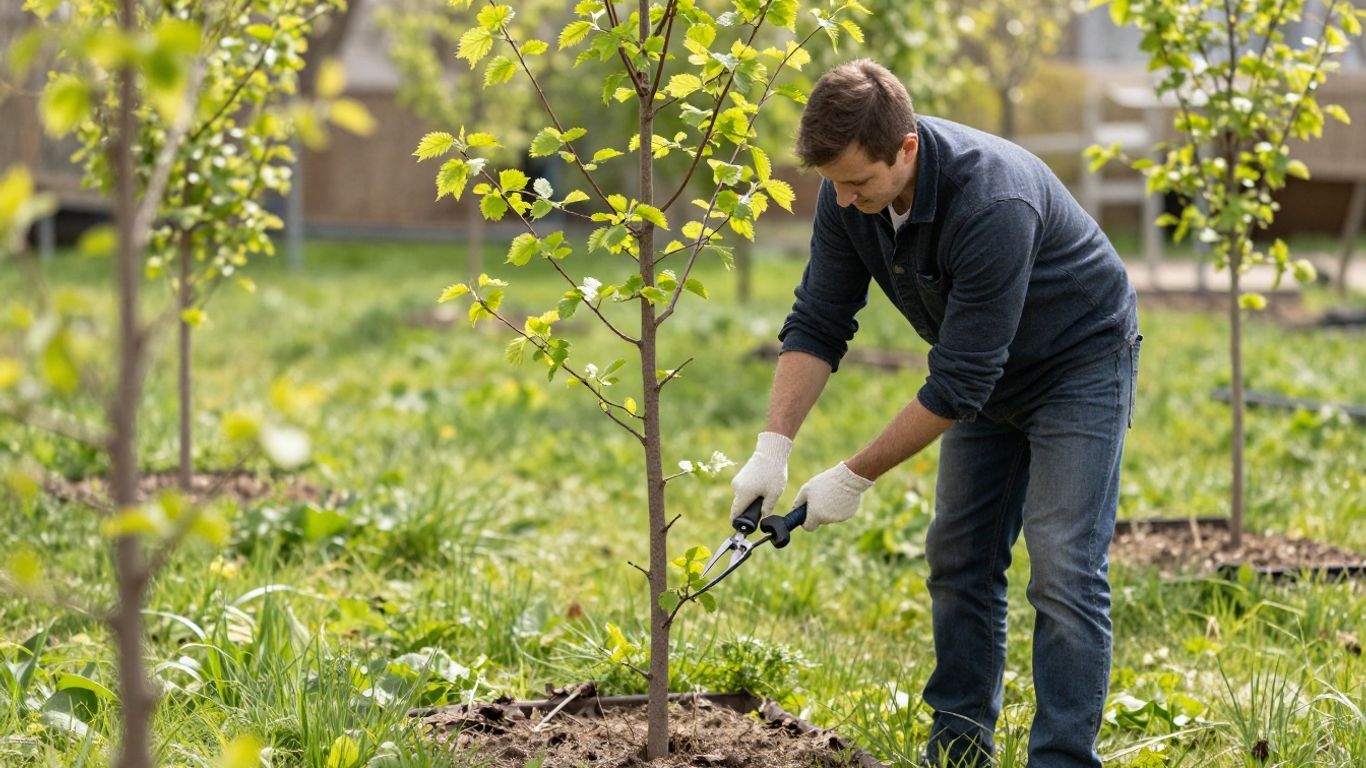
When spring settles in and temperatures are mild, it’s a great time to get out and work on shaping young trees. We always think it’s best to start when the trees are just beginning to put on new growth, which makes the whole trimming process easier and recovery quicker. Let’s break down some techniques for doing this the right way.
Making Clean Cuts For Healthy Recovery
A big part of early pruning is making sure every cut is smooth. Clean cuts help keep the tree from getting stressed and lower the chance of disease. We usually follow these steps for every branch we trim:
- Choose the right tool—sharp pruners for thin twigs, loppers for fatter branches.
- Find the branch collar (that bit at the base of a limb). Make our cut just outside it, never flush with the trunk.
- Cut at a slight angle so water runs off the surface, instead of sitting and causing rot.
If a branch is heavy, we like the three-step cut: start with a notch on the underside, then an outside cut, and finally trim the stub. This way, we avoid tearing the bark.
Let’s remember, sloppy cuts can set the whole tree back. It’s worth taking our time on every branch, even if it means fewer cuts in one session.
When To Seek Professional Tree Pruning Services
Every so often, we hit a snag with awkward limbs or tangled growth up high. It’s tempting to push through on our own, but sometimes it’s safer and smarter to call a professional. Here are signs to watch out for:
- Branches are large or too high for our tools to reach.
- There’s damage near power lines or buildings.
- We notice odd growth patterns or signs of disease we’re just not sure about.
Sometimes we can handle things ourselves, but when these situations pop up, it’s a good idea to bring in someone who trims trees for a living. They can keep our trees healthy, and we stay out of the emergency room. Plus, we usually pick up a few tips we can use next spring.
Wrapping Up Our Tree Pruning Experience
So, after spending some time out in the yard this spring, we’ve learned a lot about pruning young trees. It’s not as hard as it seems, but it does take a bit of patience and a steady hand. We found that working in mild weather made the whole process a lot more comfortable, and the trees seemed to handle it well too. By taking it slow and making careful cuts, we’re giving our trees a better shot at growing strong and healthy. If we keep up with this routine each year, we’ll probably end up with trees that look good and stand up to storms. All in all, it’s a simple job that pays off in the long run. Let’s keep at it and see how our trees shape up over the next few seasons.
Frequently Asked Questions
Why is it important to prune young trees when the weather is mild in spring?
We find that pruning during mild spring weather helps young trees recover more easily. The warmer temperatures and increased sap flow encourage quicker healing of the cuts we make. This early attention sets them up for better growth and a stronger shape as they mature.
What are the main goals when we prune a young tree?
Our primary aim is to guide the tree’s development. We focus on selecting the best branches that will form the tree’s main structure, removing any that cross or grow awkwardly. This process ensures the tree develops a sturdy framework that can support its weight later on and resist damage from wind or snow.
How do we know if we should call a professional for tree pruning?
If a tree is quite large, or if the branches we need to remove are high up or very thick, it’s best to get expert help. Safety is a big concern, and professionals have the right tools and knowledge to prune without harming themselves or the tree. For complex jobs, we always recommend seeking their assistance.
