


We often talk about trees for their shade or how pretty they look in the fall. But did you know they do a lot more for our environment? Specifically, trees play a big part in keeping our soil in place. We’re going to look at how their roots and leaves help stop soil from washing or blowing away. It’s pretty amazing when you think about it. Even thinking about tree removal services makes us consider how much trees do for the ground beneath them.
Key Takeaways
- Tree roots create a strong network that holds soil together, especially on hillsides.
- A tree’s leaves and branches act as a shield, slowing down rain and wind before they hit the ground.
- When trees are removed, the soil can become unstable and more prone to erosion.
How Tree Roots Anchor The Soil
When we think about soil erosion, we often picture wind whipping dirt away or rain washing it downhill. But a huge part of the battle against this loss happens underground, thanks to trees. Their root systems are like nature’s own rebar, holding everything together.
The Intricate Network Of Tree Roots
Tree roots don’t just go straight down. They spread out, weaving a complex web beneath the surface. The main roots act like anchors, digging deep into the earth. Then, there are the smaller, fibrous roots that spread out horizontally, creating a dense mat. This mat is what really binds the soil particles together. Think of it like a natural mesh that prevents the soil from being easily carried away by water or blown by the wind. The longer a tree has been growing, the more extensive and strong this root network becomes, offering better soil stability.
Stabilizing Slopes With Trees
On hillsides and slopes, erosion can be a big problem. Water tends to run faster down inclines, taking soil with it. Trees planted on these slopes are incredibly effective at slowing down this water flow. Their roots act like tiny dams, absorbing some of the water and holding the soil in place. This is why planting trees is such a common and successful strategy for preventing landslides and keeping slopes from washing away. We’ve seen firsthand how a well-established tree line on a steep bank can make a world of difference in keeping that soil put.
Protecting Soil From Water And Wind
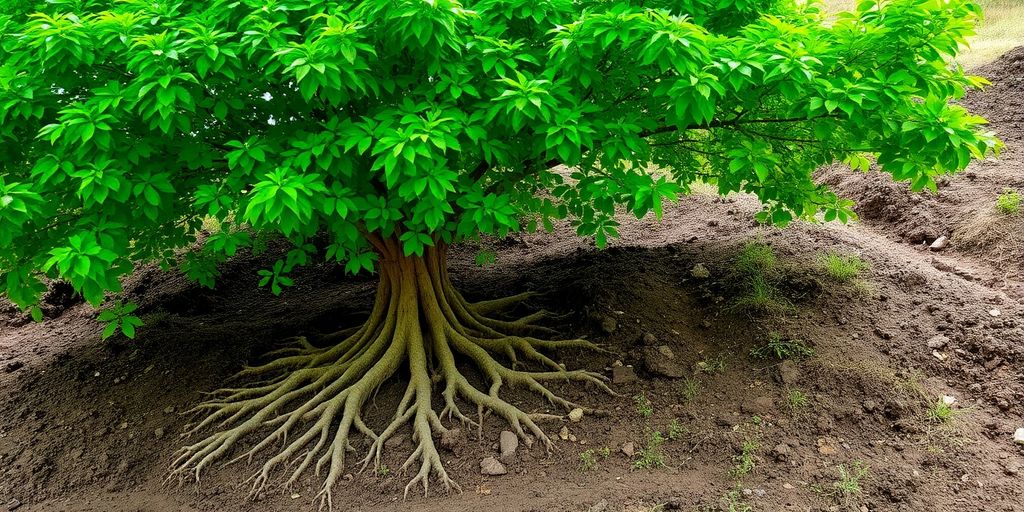
When we think about soil erosion, we often picture rain washing away topsoil or wind picking up dust. Trees play a big part in stopping both of these. Their leaves and branches act like a shield, breaking the force of heavy rain before it hits the ground. This means less water is pounding directly on the soil, which reduces how much gets washed away. Think of it like a gentle shower versus a fire hose – trees make it more like the shower.
Canopy Cover As A First Line Of Defense
The leaves and branches of trees form a canopy. This canopy intercepts rainfall. The impact of raindrops is lessened as they hit the leaves and branches, and then drip down more slowly. This significantly reduces soil splash erosion, a major way soil gets moved around. Furthermore, the canopy helps slow down wind. By creating a barrier, trees reduce wind speed at ground level, which stops the wind from picking up and carrying away dry, loose soil particles. It’s a natural windbreak that keeps our soil in place.
The Impact Of Tree Removal Services On Soil Stability
Removing trees, especially in large numbers, can have a serious effect on soil stability. Without the protective canopy and the anchoring effect of roots, the soil is much more exposed to the elements. Heavy rains can then cause significant runoff, carrying away valuable topsoil. Strong winds can also gain more power without the natural windbreaks trees provide. We’ve seen areas where clear-cutting happened, and the results were often increased erosion, making the land less productive and more prone to landslides on slopes. It really shows how important trees are for keeping the ground solid.
When trees are removed, the soil loses its natural protection. This makes it vulnerable to being washed or blown away, impacting the land’s health and usability.
Wrapping Up Our Thoughts
So, we’ve looked at how trees help keep our soil in place. Their roots act like a net, holding the dirt together, and their leaves and branches slow down rain before it hits the ground. This means less soil washes away, which is good for our farms and our rivers. We really need to think about planting more trees, especially in areas where the soil is loose or on hillsides. It’s a simple step, but it makes a big difference for the health of our land. Let’s all do our part to protect our soil, one tree at a time.
Frequently Asked Questions
How do tree roots help keep soil in place?
We see tree roots as nature’s way of holding soil together. They spread out like a net, gripping the dirt and keeping it from washing or blowing away. This is especially important on hillsides where gravity tries to pull the soil down.
Can trees protect soil from rain and wind?
Yes, trees offer a great shield against rain and wind. Their leaves and branches catch raindrops, slowing them down before they hit the ground. This stops the water from carrying soil away. Wind also has a harder time blowing loose soil when trees are around.
What happens to soil when trees are removed?
Removing trees can unfortunately make soil erosion worse. When trees are cut down, the roots that held the soil are gone. The ground becomes more open to the forces of rain and wind, which can then easily wash or blow the soil away, leading to problems like landslides.
